Action Plan to Accelerate Future Fuels
Future Fuels, such as sustainable biofuels, clean hydrogen and its derivatives (ammonia, e-fuels, e-methane), can drastically reduce emissions, and are therefore essential in the transition to net zero – particularly for the transport sector and heavy industries such as cement and steel production.
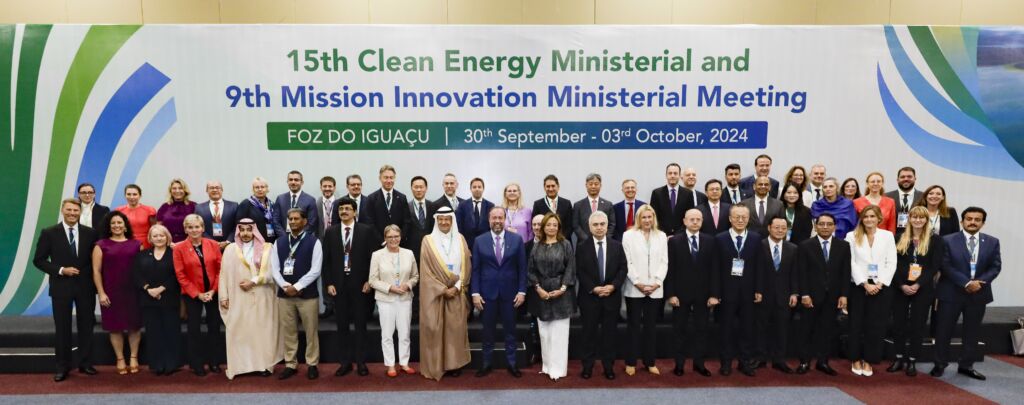
The CEM Action Plan to Accelerate Future Fuels was launched at the 15th Clean Energy Ministerial in 2024 in Brazil with the aim of bringing CEM members and fuels-related workstreams together to accelerate the deployment of future fuels.
Launched by the Ministers of nine CEM member countries, the Action Plan consists of 20 actions by interested governments, industry and partner organisations. These collaborative actions accelerate the use and supply of Future Fuels by promoting:
- Increased demand for, and use of, future fuels,
- Integrated global supply chains,
- Common and transparent standards for lifecycle carbon accounting and the sustainability of fuels.
The need to accelerate the production and use of Future Fuels has been recognised over the years by the G7, G20 and more recently captured in the UAE Consensus encompassing the outcome of the first Global Stocktake under the Paris Agreement adopted at the 28th UN Climate Change Conference.
Implementation of the Action Plan
Actions to advance the Action Plan in 2025 include:
- Launch of consultations on new ISO Workshop Agreement to accelerate carbon accounting for heavy industry products and low-carbon fuels as feedstocks.
- Launch of a Hydrogen Action Plan to promote accelerated deployment of low and near-zero emissions hydrogen in the lead-up to COP30.
- Launch of policy recommendations for Future Fuels investment by CEOs and other private leaders from across the energy and maritime sectors in the CEM-Hubs Initiative.
- Launch of a new carbon management glossary to promote a common understanding of key terms and technologies essential to the production of BECCS, e-fuels, and low-carbon industrial feedstocks.
- Launch of the Green Public Procurement Factsheet to provide governments with practical guidance on how to use public procurement to drive new demand for buildings with low-carbon materials and fuels.
- Launch of a new report on Green Public Procurement and Ecolabels to help governments harmonise environmental criteria across procurement for low-carbon materials and feedstocks.
- 2025 Hydrogen Awards of Excellence to put a spotlight on ‘Hydrogen innovations and Technologies for Hard-to-Decarbonise Sectors and Sustainable Fuels’.
Furthering the Action Plan at G20 and COP30
CEM members and key partner organisations will continue to implement the Future Fuels Action Plan through international fora such as the G20, G7, COP30, and beyond.

Future Fuels at G20
In October, on sidelines of the G20 Energy Transition Working Group and Ministerial meetings, South Africa and CEM will convene a Future Fuels Demand Creation Workshop focusing on assembling new implementation coalitions to create demand for Future Fuels in the transport and industry sectors. The session will promote the importance of greater cooperation across global value chains by aligning policies for producing Future Fuels with new and emerging regulatory obligations for users.

Future Fuels at COP30
At COP30, the CEM Future Fuels community is actively supporting sustainable fuels as a priority objective for Brazil’s Presidency, planning key outcomes and events across the energy, industry, and transport sectors. In the lead-up to Belém, the CEM Future Fuels community is participating in four of the COP30 Presidency’s dedicated Activation Groups for transitioning the energy, transport, and industry sectors – with CEM’s contributions focused on hard-to-abate sectors and Future Fuels production.
As a result of this collaboration with Brazil and key partners, at COP30 CEM will:
- Convene a High-Level Future Fuels Demand Creation Dialogue in Belém in support of expected COP30 Presidency objectives for scaling deployment of sustainable fuels.
- Lead a Energy-Maritime Leaders Dialogue to Accelerate Future Fuels.
- Launch a Public Private Implementation Statement on Demand Creation for Low-Emissions Hydrogen.
- Launch a new ISO International Workshop Agreement for Heavy Industry Products and Feedstocks jointly prepared by the CEM Industrial Deep Decarbonisation Initiative and the Industrial Transition Accelerator.
- Seek government and industry support for a new call to action to Promote Bio-based Chemicals and Materials.
- Launch an updated Green Public Procurement Pledge to better reflect the needs and interests of green industrial investment in Emerging Markets and Developing Economies.
- Bring together Energy and Transport leaders from governments and industry to accelerate the use of Future Fuels for clean transport.
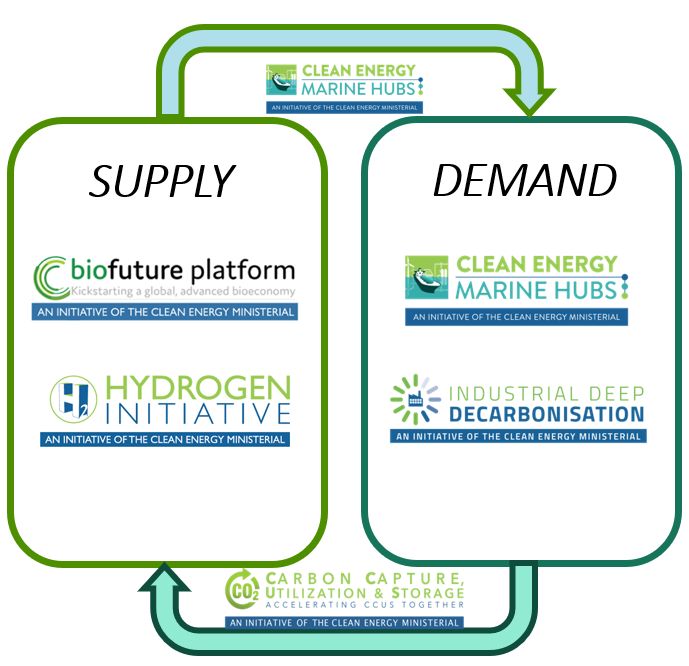
Workstreams implementing the Action Plan