
Regional and Global Energy Interconnection (RGEI) Initiative

Goal

To advance regional and global power grid interconnections and build a Regional and Global Energy Interconnection (RGEI)—a modern energy system that is clean energy-dominant, electricity-centered, highly interconnected, jointly developed, and mutually beneficial for all stakeholders.
Strategic Priorities
High level networking involving governments, institutions, private sectors
To serve as a primary global forum for power grid interconnection and clean energy transition, while expanding its membership and strengthening partnerships among governments, international institutions, and private sector stakeholders.
Policy guiding
To provide strategic policy guidance and practical toolkits to support international institutional development and policy reforms for cross-border interconnection.
To help governments address key concerns related to cross-border interconnection and clean energy development, including cybersecurity, regional dependence, energy security, and technological reliance.
Energy system planning
To promote regional and global power grid interconnections, facilitate the large-scale development and allocation of global clean energy, and thus achieve a clean energy transition.
Technology sharing
To create an active platform for technology and knowledge sharing, and facilitate the exchange of best practices among various regional efforts to establish multinational power pools and promote cross-border clean energy development.
Capacity building
To strengthen capacity building for regional and cross-border power grid interconnection through knowledge dissemination, practical learning, thematic events, training programs, and experience sharing among governments, utilities, and research institutions.
Investment facilitating
To facilitate investment mobilization for interconnected clean energy systems and related power grid infrastructure by enhancing project preparation, strengthening the enabling investment environment, and improving linkages between bankable projects and potential investors.
Building pilot projects
To develop cross-border pilot and demonstration projects to tackle technical and systemic challenges in the clean energy transition and digital and intelligent grids, with the aim of generating replicable models for broader deployment.
Standards leveraging
To promote the application of international technical and operational standards in cross-border projects, thereby reducing barriers to power grid interconnection while also supporting the development of secure and reliable power grids.
Community
Co-leads

Participants


Points of contact:
Wang Jian, jian-wang@geidco.org
Yin Bo, bo-yin@geidco.org
Projected Results in 2026
The RGEI workstream will promote the RGEI initiative through means such as organizing and participating in conference, promoting the implementation of key projects, and conducting special research.
High level Events: CEM events, HLPF, COP, APEC
- Hold a technical meeting at CEM official meeting, thematic side event at CEM ministerial meeting;
- Hold a thematic side event at UN HLPF;
- Hold thematic side events at COP31, inviting CEM Secretariat and member countries;
- Hold a technical session on energy cooperation during the APEC Ministerial Meeting.
Capacity building
GEIDCO will continue leverage its cooperation networks with institutions such as UNDP, UNFCCC, and UNSDSN, to focus on the key priorities of RGEI member countries, conduct capacity-building training programs centered on topics including resilient smart grids, energy storage, and electric vehicles, facilitating the exchange of technologies, project cases, and other relevant experiences.
Expand the RGEI membership base
Proactively invite new countries and major international organizations to join the RGEI initiative, with a view to continuously expanding its partner network and global influence.
Refine the organizational structure of the RGEI initiative
Invite RGEI member countries to establish an Initiative Strategy Committee, which will be responsible for reviewing the initiative’s key focus areas and work plans, thereby further enhancing the participation of all member countries.
Conduct special research
Systematically conduct research on the implementation paths and schemes for the new round of Nationally Determined Contributions (NDCs), carry out in-depth studies on energy and power development in key regions such as Southeast Asia and Central Asia, advance thematic research on areas including the climate resilience of power systems, green energy and new-type industrialization, electric vehicle industry policies of key countries, and new-quality productive forces in the energy sector, and formulate high-quality reports.
Resources
Resources
Future Energy Declaration: A Roadmap for Clean, Secure and Equitable Energy Transitions
June 2026

Resources
Digital-intelligent Resilient Power Grids
August 2025
Resources
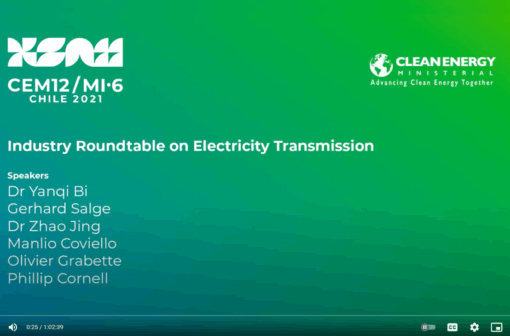
Industry Round-table on Electricity Transmission
July 2021
Resources
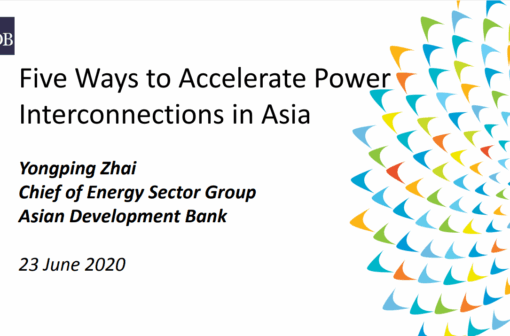
RGEI Webinar: Five ways to accelerate power interconnection in Asia
June 2020
Resources
RGEI Webinar: Power Grid Connection and itsTechnical Issues
May 2020
Resources
RGEI Webinar: Electricity Trade in the GCC and Middle East: Potential of a Pan-Arab Electricity Market
April 2020