Agenda for Action on Power Systems Solutions
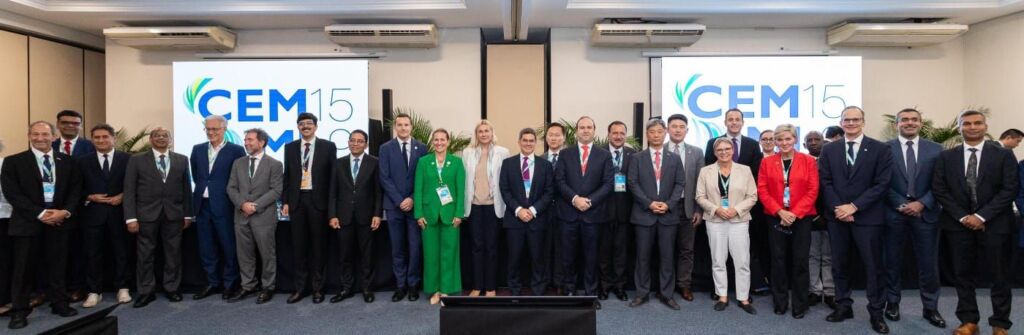
The Agenda for Action on Power Systems Solutions was launched at the 15th Clean Energy Ministerial in Brazil in October 2024. Endorsed by 28 CEM members, the Agenda for Action aims to boost power systems infrastructure deployment to achieve international climate and clean energy goals.
Signatories of the Agenda for Action intend to create and deploy sustainable, decarbonized power systems that are cost-effective, equitable, secure, and resilient. This will be achieved through activities of existing CEM workstreams that aim to:
- Improve planning and investment certainty
- Support modernizing and expanding transmission and distribution grids
- Unlock power system flexibility
- Deploy e-mobility infrastructure
- Strengthen energy supply chain resilience and sustainability
- Advance a just and inclusive transition
Implementation of the CEM Agenda for Action:
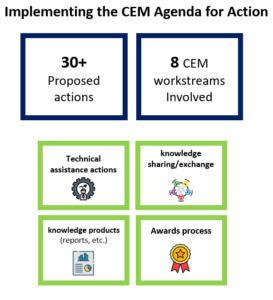
8 CEM workstreams have been implementing more than 30 activities to advance the Agenda for Action. These activities include technical assistance actions, opportunities for knowledge sharing and idea exchange, the publication of knowledge products, and awards processes.
Activities delivered in 2026
The transformation of the power sector is increasingly an investment and implementation challenge. While technologies are available and capital is being committed, investment is not translating into infrastructure deployment at the scale and pace required. Policy uncertainty, regulatory barriers, permitting delays and institutional fragmentation continue to constrain project development and bankability.
Building on the CEM Agenda for Action on Power System Solutions, CEM is working across its power sector initiatives to strengthen enabling conditions for investment, including long-term planning, regulatory frameworks, institutional coordination, technology-specific risk mitigation and public-private collaboration.
A key deliverable for CEM17 was the CEM-WEF Executive Brief “Powering Growth: Bridging the Investment Gap in Electricity Systems” providing practical recommendations for governments to improve investment conditions and translate financial commitments into bankable infrastructure projects.
This is complemented by multiple additional deliverables from power sector initiatives, including:
- Unlocking Global Investment in Energy Storage – White Paper (CEM Supercharging Energy Storage Initiative): Identifies key regulatory, market and financial conditions needed to unlock investment and accelerate energy storage deployment at scale.
- Policy Brief on Strengthening Collaboration and Coordination for Accelerated Grid Development
- ISGAN: Offers practical guidance to improve coordination, governance and investment planning for distribution grid modernisation.
- Casebook on Smart Distribution Grid Planning (ISGAN): Presents 15 case studies from ten countries showcasing innovative approaches to distribution grid planning and management.
- ISGAN Lighthouse Knowledge Hub: Provides an interactive knowledge platform to support coordinated, adaptive and forward-looking distribution grid planning.
- Policy Brief on Empowering Energy Regulators (CEM ERAD): Provides actionable recommendations to strengthen regulatory institutions and their capacity to support clean energy transitions and investments.
- Next-Generation Geothermal Case Study Series (GeoFuture Initiative): Presents 13 projects across 11 countries, highlighting technological, regulatory and financing pathways to scale next-generation geothermal energy.
- 2026 Thought Leadership Report on Strategic Electrification (21CPP and ISGAN): Highlights the role of electrification in economic growth, competitiveness and energy security, calling for a whole-system approach to power sector transformation and investments.
- Principles of the SI-Nuclear Nexus (NICE Future Initiative): Establishes ten principles to advance collaboration between superintelligence (SI) and nuclear energy, supporting nuclear deployment and the growing power needs of SI infrastructure.
- International Use Cases of AI in Smart Energy Systems (ISGAN–ETIP SNET): Examines 57 AI applications and projects, highlighting opportunities, deployment challenges and recommendations for scaling AI in electricity systems.
- The 12th ISGAN Awards of Excellence (2026) on “Excellence in Long-Term Planning of Smart Distribution Grids under Uncertainty” highlights innovative approaches to addressing the growing complexity and uncertainties of distribution grid planning
Activities delivered in 2025
- The launch of the Solar PV Manufacturing Cost Model, supporting policymakers, investors, and industry in assessing policy impacts, identifying competitive advantages, and guiding strategic investments in resilient solar PV supply chains.
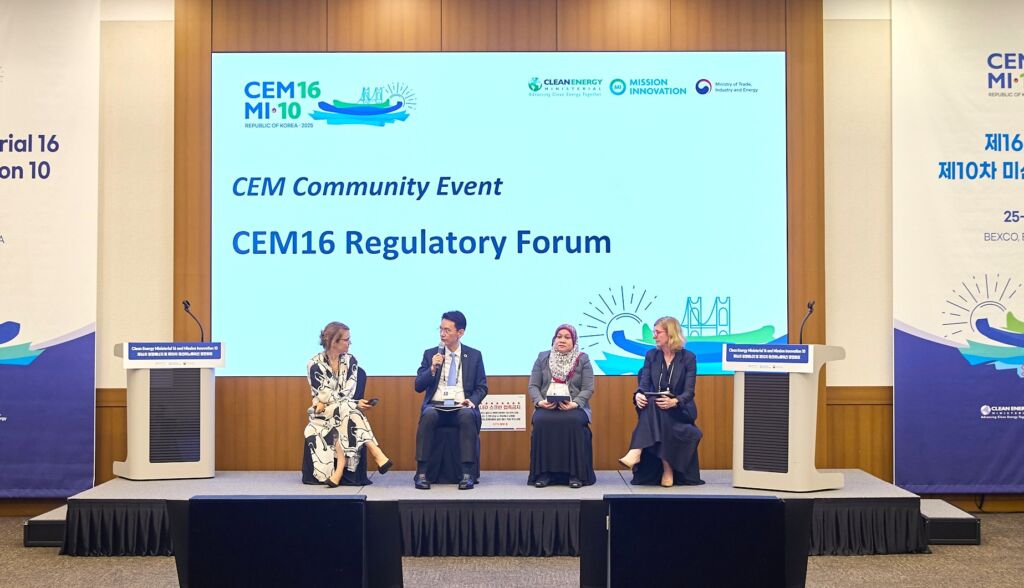
- The inaugural CEM16 Regulatory Forum, organized by the CEM Empowering Regulators Campaign, convening policy makers and regulatory agencies to align policy goals with regulatory action for the clean energy transition.
- The launch of the joint CEM-RAP Empowering Regulators Blueprint, outlining pathways for governments to strengthen regulators’ role in advancing decarbonization.
- The launch of a new CEM initiative to accelerate next-generation geothermal power.
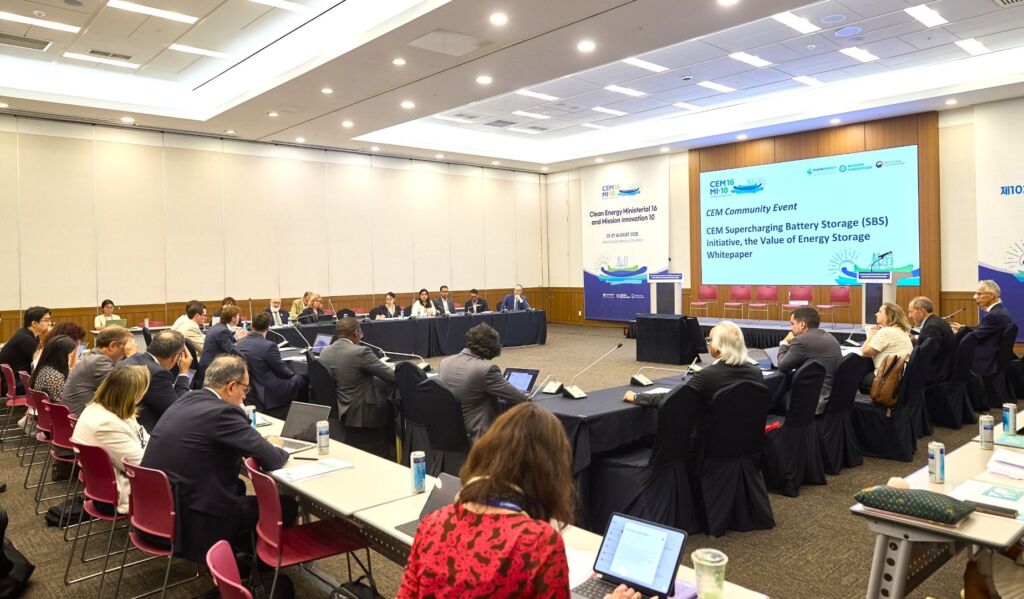
- The release of a white paper highlighting storage’s role in integrating renewables, improving grid reliability and resilience, reducing costs, strengthening energy independence, and lowering emissions.
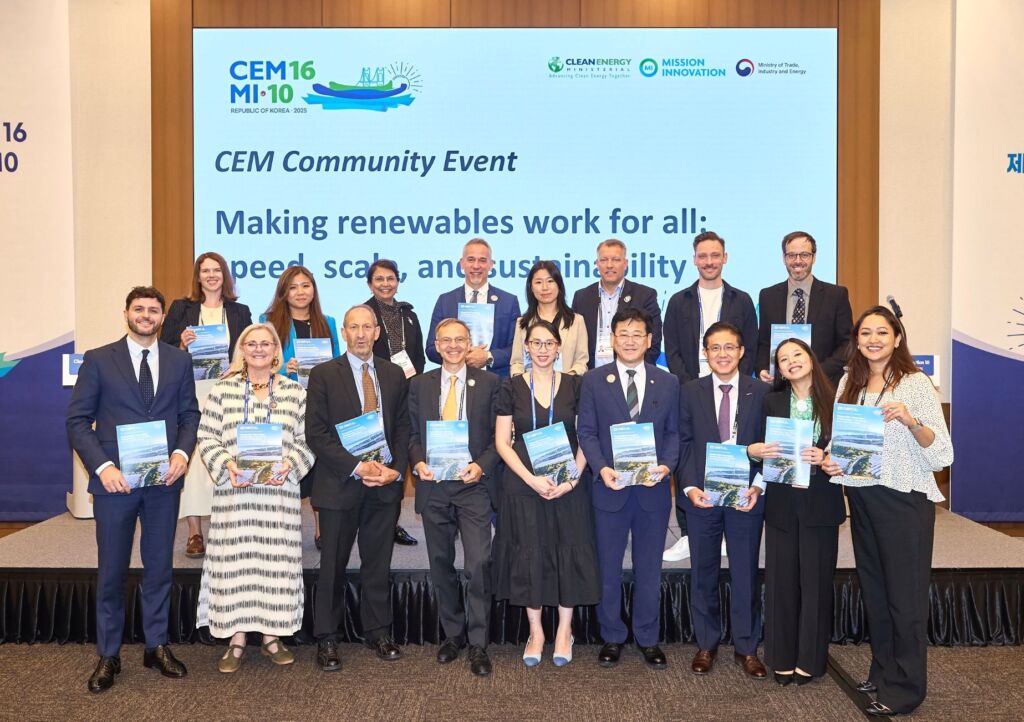
- The publication of a joint CEM–WEF report showcasing real-world use cases of responsible renewable deployment, balancing biodiversity, social inclusion, and system resilience.
- The 2025 ISGAN Award of Excellence, recognizing outstanding smart grid projects focused on “Solutions for Enhanced Grid Operation”.
- Strengthening EMDE engagement in CEM power sector activities, including the CEM regional workshop in Malaysia, which opened a first structured dialogue with ASEAN governments and regulators on power system transformation, and CEM16 in Busan, which consolidated EMDE leadership through broad participation and new partnerships.
Activities delivered in 2024
- The launch of a new CEM Empowering Regulators for Accelerated Decarbonisation campaign.
- The launch of the report Battery storage unlocked: Lessons learned from emerging economies.
- The launch of the report Solar PV supply chains: Technical and ESG standards for market integration.
- The delivery of a technical workshop on E-mobility in Madrid.
- The launch of the second cohort of the CEM 21st Century Power Partnership Action Plans.
Looking ahead, CEM continue its efforts on power system transformation, turning ambition into action. Building on the Agenda for Action, we will drive progress through knowledge products, practical toolkits, and high-level dialogues, sharing lessons learned and best practices that open pathways for investment and transformation. Regional dialogues, including in EMDEs, will also serve as launchpads for concrete outcomes, while major international fora—New York Climate Week, the G20, and COP—will showcase CEM members’ leadership in accelerating the global power transition.
Workstreams implementing the Agenda for Action: